

Turning sustainability into a competitive foundation

Cas-Vos operates in a sector where sustainability performance has become a commercial prerequisite rather than a voluntary ambition.
As an infrastructure contractor they design, build, and maintain underground networks for fiber, telecom, gas, electricity, and water, including related signaling and directional drilling services.
As such, working for major clients and public authorities, sustainability requirements have increasingly entered procurement processes in the last few years:
- Structured sustainability reporting is now expected
- EcoVadis assessments are starting to become a procurement requirement for some of their clients
- Success rates in tenders will partially depend on demonstrable CO₂ management and transparent documentation
Without a structured and proactive sustainability approach, Cas-Vos risked losing competitiveness in future tenders and recognised the need to consolidate their efforts into a coherent and scalable framework.
The challenge was not a lack of commitment but moving from a pragmatic ad-hoc approach to a more strategic and integrated structure that could anticipate evolving market expectations.
Data collection, especially given the large volume of purchased materials and suppliers, required significant manual effort. Sustainability actions were present, but not yet organised within a recurring framework.
The opportunity was clear: move from responsive action to structured anticipation – ensuring that future procurement requirements could be met efficiently and confidently.
Choosing continuity over one-off solutions
As sustainability requirements from major clients and public authorities became more structured and recurring, Cas-Vos enlisted our assistance to ensure their approach would remain efficient, credible and aligned with evolving procurement expectations.
While the organisation had consistently responded to client requests when needed, evolving criteria made it clear that a more forward-looking trajectory would strengthen both operational clarity and long-term competitiveness.
From the outset, the emphasis was on:
- creating a defensible foundation
- avoiding fragmented or ad hoc initiatives
- building a structure that can evolve alongside the organisation
Establishing a defensible foundation
The first step in a sustainability journey is creating insight.
We conducted a first CO₂ analysis to provide Cas-Vos with a defensible emissions baseline, clarifying where emissions occur and which categories are most relevant to their activities. This helps answer questions like:
- Where do our emissions actually sit?
- Which emissions categories matter most?
- What is realistic to reduce?
- How can we respond credibly when clients ask us questions about our impact?
This baseline created strategic insight and allowed data-driven steering of Cas-Vos’ sustainability efforts.
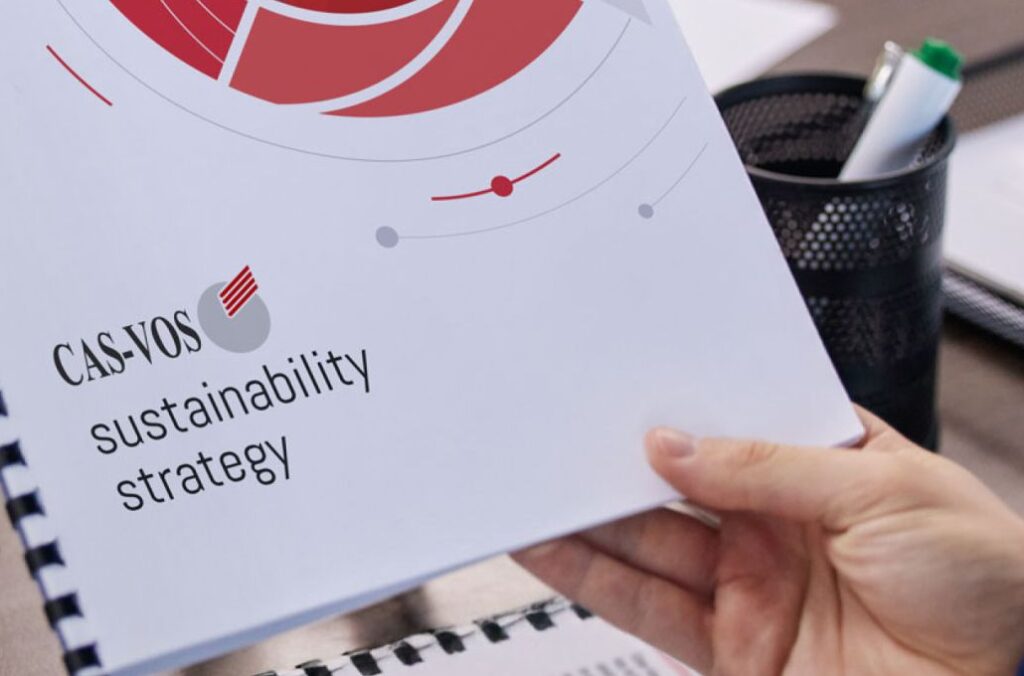
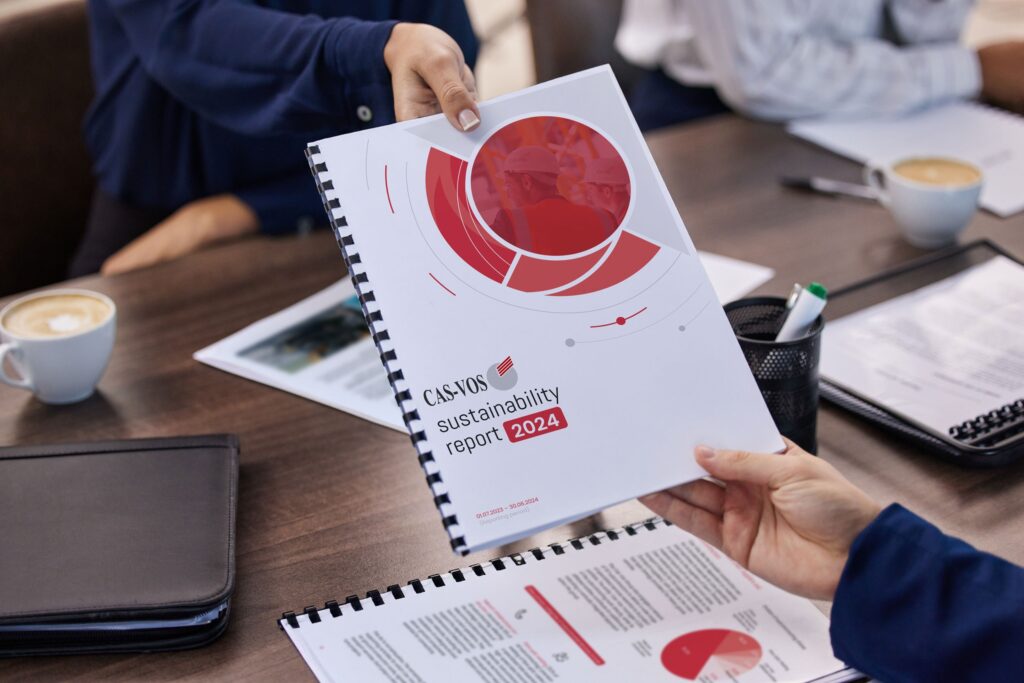
Next, we structured sustainability information into a VSME-aligned sustainability report. The increased need for transparency towards stakeholders demanded coherence and explainability, and the report helps transition from ad-hoc answers to structured credibility.
From baseline to ongoing evaluation
With the foundation in place, the focus shifted from insight to continuity.
Cas-Vos now works with annual CO₂ tracking, reduction and evaluation, enabling year-on-year reflection on what has changed, which measures are effective, and where further reductions are realistic within operational constraints.
This recurring cycle turns sustainability into a learning process, rather than a static snapshot.
Preparing ahead for EcoVadis
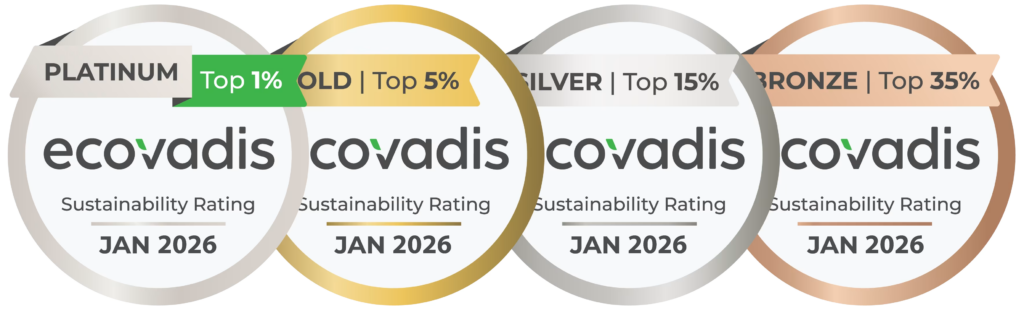
As sustainability efforts mature, the need for external recognition and comparability becomes more relevant. For some future projects, Cas-Vos will need to have an EcoVadis rating and structured sustainability documentation to participate in tenders.
Our ongoing support obtaining this certification helps Cas-Vos translate their internal sustainability efforts into a framework that is widely recognised by clients and procurement teams.
Rather than treating EcoVadis as a standalone score, our focus lies on:
- aligning documentation with existing practices
- strengthening consistency between data, policies and actions
- using the assessment as feedback to further improve structure and governance
In this way, EcoVadis becomes a reflection of progress, not a goal in itself. This proactive preparation also reduces last-minute pressure and protects competitiveness in future tenders.
For more information on EcoVadis, read our blog post on the topic.
Dealing responsibly with residual emissions
Not all emissions can be reduced immediately or entirely.
Where reduction measures reach their practical limits, we advise Cas-Vos on compensation options – cautiously and with a focus on transparency. Compensation is considered as:
- a complement to reduction efforts, not a replacement
- part of a broader, clearly explained climate approach
- a way to address residual emissions while longer-term solutions are explored
This ensures that compensation fits within a credible and balanced strategy, rather than functioning as a shortcut.
Engaging beyond the organisation
Sustainability does not stop at the company boundary.
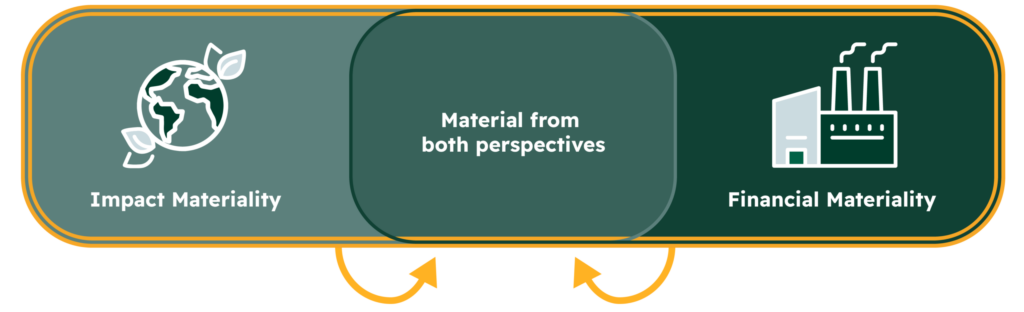
Currently, we are working with Cas-Vos on a Double Materiality Assessment (DMA), identifying which environmental, social and governance topics are truly material – both in terms of impact and business relevance.
A topic is material if it is significant enough to influence performance, risk exposure or strategic positioning. A DMA helps answer questions like:
- Which ESG topics truly matter for Cas-Vos?
- Where is impact highest?
- Which themes are commercially relevant?
Insights to these questions help align future sustainability investments with both operational impact and stakeholder expectations.
For more information on how to leverage a DMA for strategic focus in your sustainability plan, read our blog post.
Strengthening sustainability across the value chain
Recognising that a significant share of impact in their value chain occurs beyond the organisational boundaries, Cas-Vos has also started engaging their subcontractors more actively.
With that goal in mind, we organised three dedicated workshops for these subcontractors:
- One focused on sustainability awareness in general
- One specifically addressing Cas-Vos’ sustainability challenges, and the need for qualitative CO2 data
- One practical workshop on carbon calculation, resulting in some contractors completing a complete analysis
The objective is twofold: improve the quality and reliability of Scope 3 data, and stimulate emission reduction efforts throughout the supply chain. While this trajectory is still ongoing, it marks an important shift from measuring impact internally to strengthening sustainability performance across the broader ecosystem in which Cas-Vos operates.
For more information on Scope 3 emissions data and their importance, read our blog.
What defines this collaboration
What stands out in this case is not a single deliverable, but the continuous investment in improving sustainability performance.
From an initial CO₂ analysis to annual tracking and a repeatable reporting structure, sustainability at Cas-Vos is approached as an evolving process – supported consistently, refined over time and adapted as expectations change.
Impact: what changed for Cas-Vos
Through this structured approach, Cas-Vos now benefits from:
- A defensible CO₂ baseline and annual reduction trajectory
- Structured sustainability reporting aligned with stakeholder expectations
- Proactive preparation for EcoVadis and procurement requirements
- Increased credibility in discussions with major clients
- Reduced risk of last-minute tender pressure
- Progressively lower administrative burden through data integration
Sustainability has shifted from a reactive obligation to a structured commercial safeguard.
Our role as The Ecological Entrepreneur
As Cas-Vos’ all-round sustainability advisor, The Ecological Entrepreneur supports the organisation across its sustainability journey, including:
- CO₂ analysis, tracking and evaluation
- Sustainability reporting structure and framework alignment
- EcoVadis support
- guidance on compensation where appropriate
- double materiality and stakeholder engagement
Always with the same principle: build steadily, stay grounded in reality, and focus on lasting credibility. Because meaningful sustainability progress is rarely the result of isolated decisions – it is built through long-term collaboration and trust.
Does this sound like an approach that suits your sustainability ambitions? Get in touch and let’s explore how we can work together!